
Airfield Lighting Control Management System

Airport control systems with direct engineering ownership.

Control visibility for critical airside operations.

AMD SYS develops Airport Lighting Control and Monitoring Systems with one integrated scope across architecture, electronics, software, HMI, integration, commissioning support, and training.

The system is intended for control areas and airfield operational environments where alarm clarity, operator logic, and maintainable structure need to stay aligned. AMD SYS uses COTS and can integrate all major CCR brands, multiple communication protocols, and ICLMS platforms from various manufacturers. The design approach is modular, allowing the system to be expanded, upgraded, or adapted without forcing unnecessary replacement of the full installation.

Control rooms, field integration, protocol interoperability, modular growth
COTS-based architecture Multi-brand CCR integration Vendor-independent ownership
Focus Airport ALCMS

Primary specialization for airfield lighting control and monitoring projects. The focus includes supervisory control, field-status visibility, CCR integration, alarm handling, and operator-oriented HMI workflows for runway and taxiway operations.

Standards
ICAO EASA IEC FAA
Applicable Standards
  • Alignment with the current ICAO Annex 14, Volume I requirements for aerodromes
  • Design considerations informed by ICAO Aerodrome Design Manual Parts 4, 5, and 9
  • Reference to EASA CS-ADR-CSN certification specifications where applicable
  • Surface movement guidance principles based on ICAO DOC 9476-AN/927
  • Advanced surface movement guidance and control principles based on ICAO DOC 9830-AN/452

Systems

One control-focused practice for airport lighting supervision and control.

AMD SYS delivers Airport ALCMS with direct engineering ownership across control architecture, field integration, supervisory software, and operator visibility. A modular COTS-based design gives the final client a clearer upgrade path, easier maintenance, better spare-part availability, stronger long-term control over expansion, and full ownership of the system without being tied to a specific equipment manufacturer.

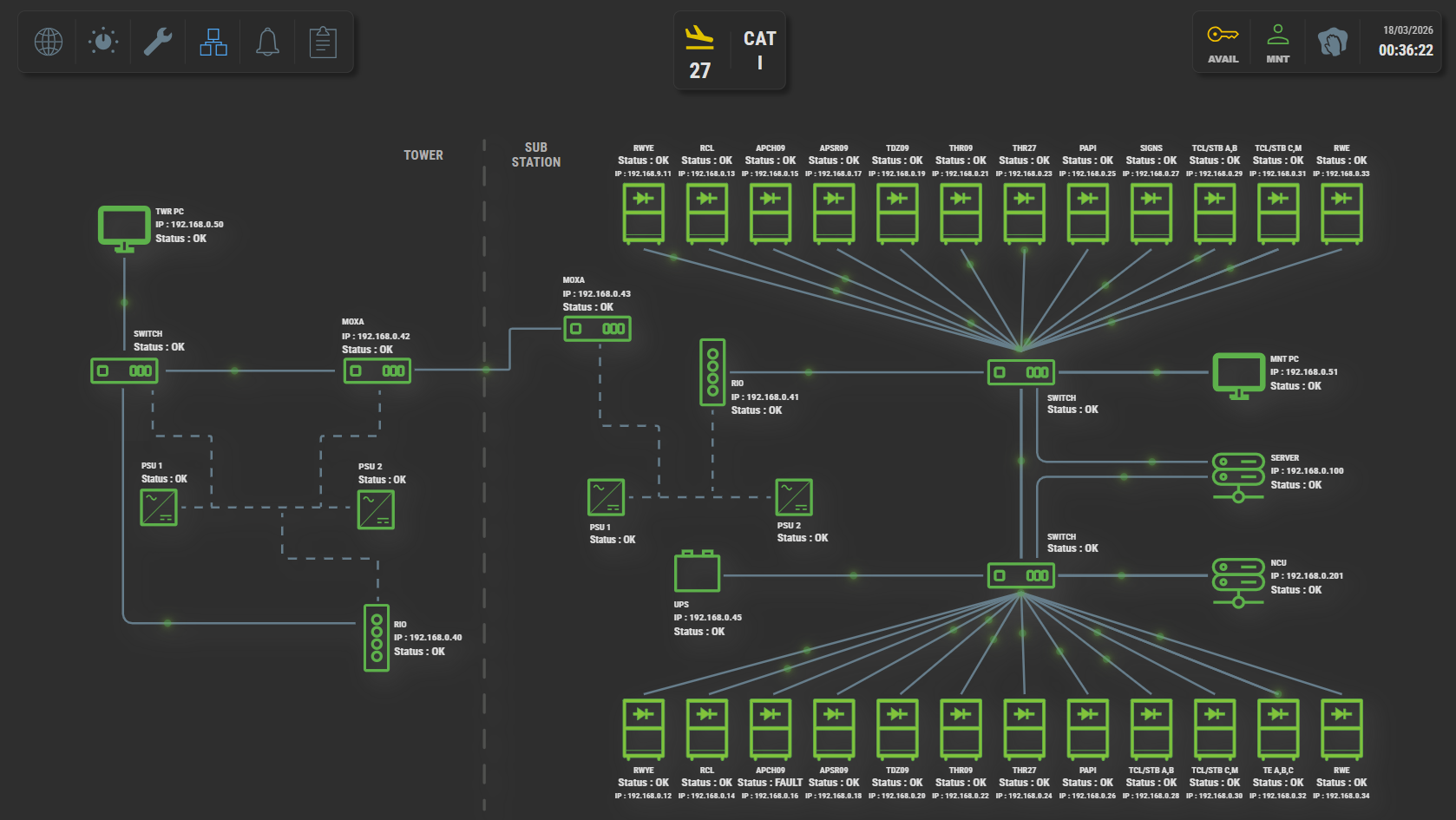
AMD SYS airport ALCMS interface preview
01

Airport ALCMS

Primary company focus for airfield lighting control and monitoring projects using COTS-based system delivery. The scope covers supervisory control, field-status monitoring, operator command structure, alarm visibility, and the coordination of runway, taxiway, CCR, and related lighting functions. It also includes interface definition, communications structure, modular expansion planning, and the practical integration work needed to connect field equipment with the operational control layer. The objective is not only to display system state, but to support clear operator decisions and maintainable long-term ownership of the full ALCMS environment.

Designed in alignment with ICAO, IEC, and FAA requirements, with modular architecture and integration support for multiple CCR brands, communication protocols, and ICLMS manufacturers.

02

COTS benefits

Commercial off-the-shelf components support faster delivery, easier sourcing, lower lifecycle risk, better long-term serviceability, and greater freedom from single-manufacturer dependency. They also help the final client plan upgrades and replacements with less disruption over time.

03

Protocol and CCR integration

Integration support across CCR brands, communication protocols, and field systems reduces vendor lock-in. It also makes phased modernization more practical where legacy equipment and new supervisory layers need to coexist.

04

ICLMS interoperability

Connection to ICLMS platforms from various manufacturers helps protect existing infrastructure and phased upgrades. Existing investment can be preserved while the control layer is clarified, expanded, or modernized around operational needs.

Functions

Engineering functions aligned across architecture, control, and deployment.

Architecture, hardware, software, deployment, and operator visibility are treated as connected layers within one delivery scope.

Area Content
Architecture System structure, interfaces, communications, redundancy, COTS-based implementation, modular architecture, expansion paths
Hardware Electronics, control hardware, panel-level logic, CCR integration across multiple brands
Software Supervisory logic, HMI workflows, alarm handling, monitoring, reporting, and protocol interoperability
Deployment Commissioning support, ICLMS integration from various manufacturers, operator transfer, user training
Design principle

Operator actions, field states, and alarm conditions need to be legible within seconds, not discovered through layers of navigation. A modular COTS-based design benefits the final client through easier maintenance, better component availability, faster replacement, reduced disruption during upgrades, lower dependence on a single vendor, more predictable long-term support planning, and full ownership of the system architecture.

Principles

Delivery remains structured from design through handover.

Each project is developed with attention to system architecture, maintainability, operator usability, and reliable handover into live operations.

Architecture before implementation

System structure, interfaces, reliability, and operator use are resolved before detail execution. That reduces downstream rework and keeps integration decisions tied to operational logic instead of short-term convenience.

Modular design for long-term flexibility

Modular system design helps the client expand functions, replace subsystems selectively, and manage upgrades with lower operational impact. It gives the site a more controlled path for future change instead of forcing full-system replacement.

COTS for maintainability and sourcing

COTS components make replacement parts easier to source, shorten intervention time, and reduce dependency on rare or proprietary hardware. This improves serviceability and makes long-term support planning more predictable.

Client ownership without vendor lock-in

The final client owns the system and can maintain, expand, or integrate it further without being bound to a single equipment manufacturer. That ownership matters when procurement, support, or operational priorities change over the system lifecycle.

Hardware and software in one scope

Electronics, control logic, and supervision are handled as connected parts of one system. Field behavior, operator actions, and supervisory responses are therefore engineered to support each other rather than compete.

Operator-oriented delivery

Commissioning support and user training remain part of delivery, not an afterthought. The goal is a system that is not only technically complete, but also usable and understandable in live operation.

20+ years of engineering experience

Background in electronics and software design for technically demanding environments. That experience supports practical judgment across architecture, diagnostics, commissioning, and long-term maintainability where operational continuity is critical.

Process

From definition to training in four controlled stages.

The delivery model follows a structured sequence from requirement definition through design, integration, commissioning support, and user training.

01

Define

Scope, interfaces, operating conditions, control objectives.

02

Design

Architecture, electronics, software layers, HMI structure.

03

Integrate

Control, monitoring, communications, field components.

04

Transfer

Commissioning support, operator transfer, user training.

Contact

Discuss an airport ALCMS project.

AMD SYS is available for Airport ALCMS engineering and integration projects that require structured design, direct technical involvement, and maintainable long-term system ownership.